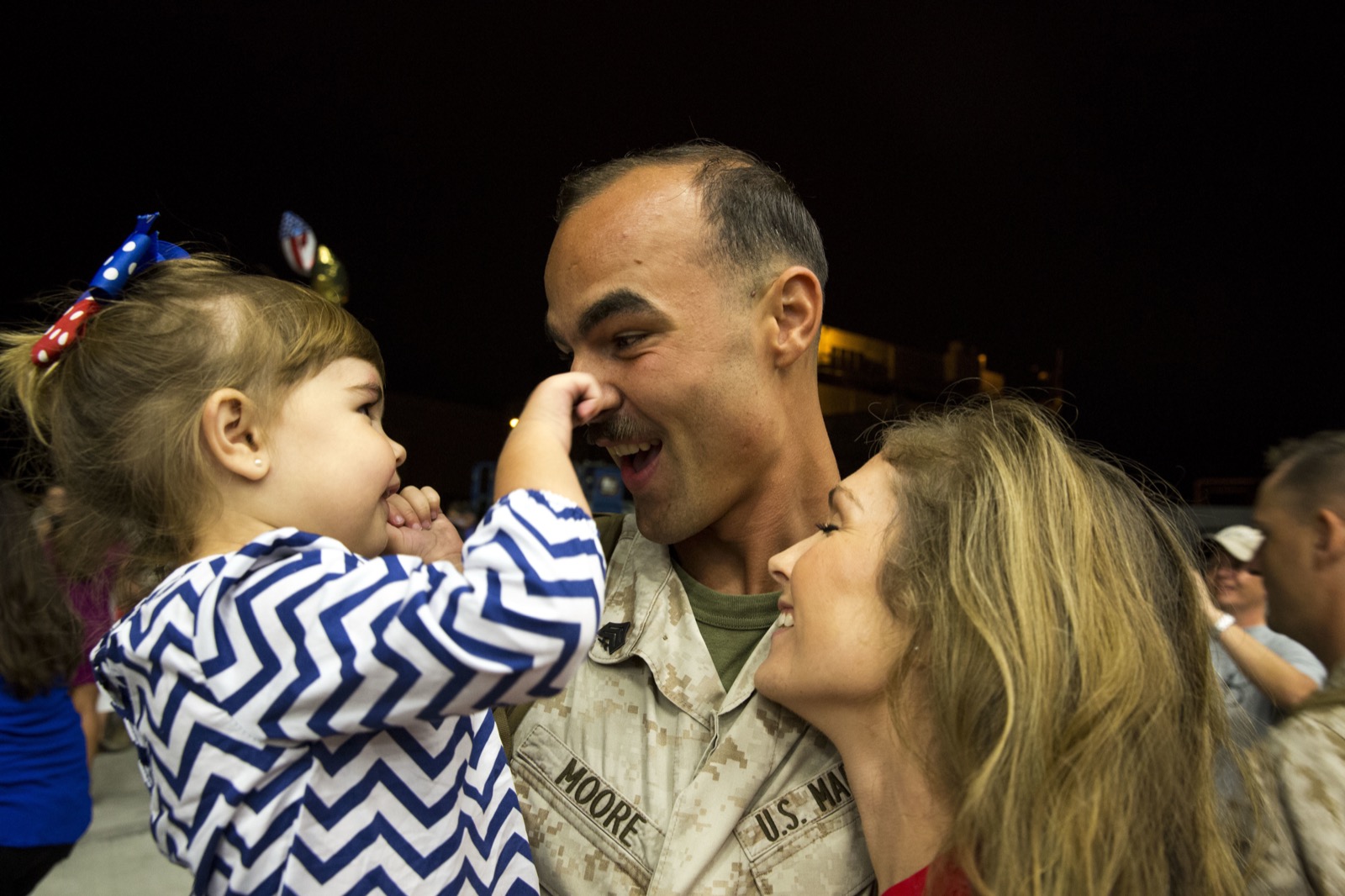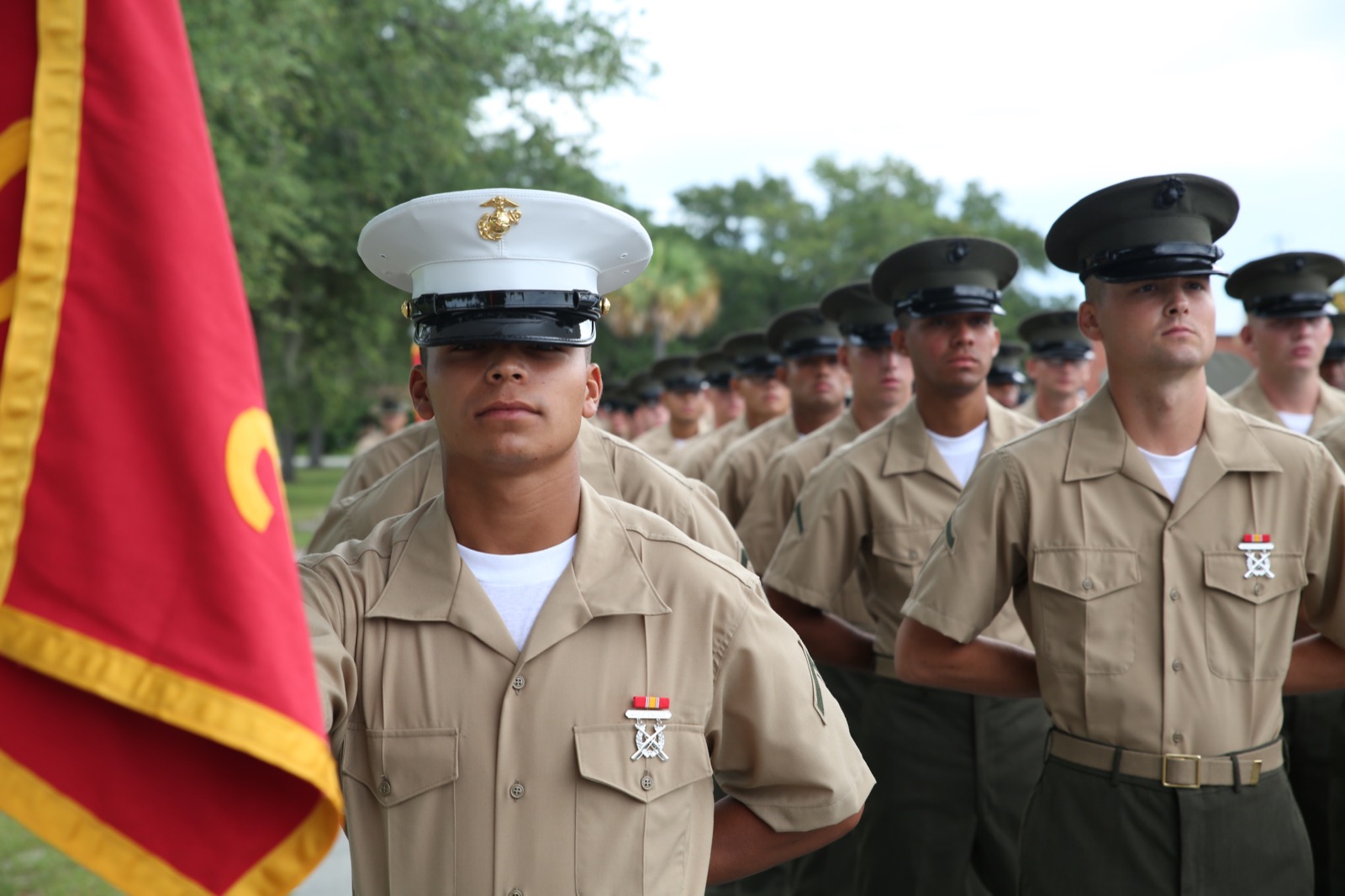
Somewhere right now a lance corporal is sitting on a barracks mattress, phone in hand, talking to a fiancée who lives 1,800 miles away, while a roommate offers unsolicited legal analysis from the other rack. If that’s you, welcome. This post is the straight version of the conversation the barracks keeps getting wrong.
We’ll cover what the Marine Corps actually requires, what it merely expects, what changes about your housing and pay, and how to handle the one topic everyone whispers about: the contract-marriage stereotype.
Nobody Has to Sign Off on Your Marriage
Start with the myth that refuses to die: that a PFC needs the company commander’s blessing to get married. There are no laws unique to military marriage, and service members can marry whomever they want[1]. You get a state marriage license like any civilian, you have a legal ceremony, and the marriage is valid, with no request chit and no age-of-rank gate. The narrow exceptions are things like fraternization rules (an officer and an enlisted Marine can’t start a relationship) and service academy cadets, who can’t marry until they graduate[1].
One honest caveat: if you’re stationed overseas and marrying a foreign national, some commands and host countries add their own counseling and screening steps. That varies by installation, so ask your legal assistance office before you plan anything.
Permission and courtesy are different things, though. Tell your chain of command before the wedding, not after the fact when your team leader hears it secondhand. Marriage touches your leave request, your emergency data, your pay, and your housing status, and your command has to process all of it. A Marine who shows up with a plan and a timeline reads as squared away. A Marine whose marriage surfaces during a random page-11 audit reads as a problem.
What Your Command Actually Cares About
Here’s the part the barracks gets backwards. Your platoon sergeant isn’t grading your love life. What the command cares about is administrative completeness and readiness: is your Record of Emergency Data current, is your spouse enrolled in DEERS, is your SGLI beneficiary right, and can you still deploy on time. Military OneSource is blunt that your first stop after the wedding should be the nearest ID card facility to enroll your spouse in DEERS[2], and TRICARE gives you 90 days from the date of marriage to make changes to your health plan[3]. Bring originals or certified copies: the marriage certificate, your spouse’s birth certificate, Social Security card, and photo ID[3].
We wrote a separate walkthrough of the certificate-to-DEERS-to-IPAC sequence in our Marine Corps DEERS and BAH guide, so we won’t repeat it here. The short version: the ceremony creates the marriage, and the paperwork afterward is what makes the Marine Corps recognize it.
Marriage and the Barracks: When You Actually Move Out
The housing question drives more junior enlisted marriages than anyone admits, so let’s be precise about it. The Marine Corps requires single Marines in paygrades E-5 and below to live on base, and junior Marines in E-1 through E-3 typically share a room[4]. Once you’re married with your dependency paperwork complete, you’re no longer “single” for housing purposes. Married service members can use their housing allowance to rent in the community or apply for government family housing where it exists[4].
Two honest wrinkles. First, the exact checkout timing runs through your command and the installation housing office, and local procedures differ from Lejeune to Pendleton to Okinawa. Don’t sign a lease off a buddy’s timeline; get yours from your own admin shop. Second, if your spouse stays back home while you finish a school or a tour, you may end up a “geographic bachelor,” married but living apart, and the services handle that housing situation differently depending on space[4]. Married on paper doesn’t automatically mean an apartment together next week.
The Money, Without the Barracks Math
Every Marine has heard a number. “Dude, you’ll get like two grand a month.” Ignore the number. Basic Allowance for Housing is set by your rank, your duty station’s ZIP code, and whether you have dependents[5], and the with-dependents rate at an E-2’s grade in one town looks nothing like the same rate two states over. Look up your actual duty station in the Defense Travel Management Office calculator[6] before you budget a single dollar. For when the higher rate actually starts and the paperwork that triggers it, our DEERS and BAH walkthrough covers the sequence.
And notice what the Department of Defense itself says about marrying for the benefits: tempting, but “by itself it’s not enough reason to enter into a legally binding contract”[2]. When the DoD’s own family-support arm puts that in writing, believe that they’ve seen how the other version ends.
The “Contract Marriage” Stigma, Handled Straight
Marine culture has a word for marriages it suspects: contract marriage. The stereotype exists for a reason. Sham marriages are a real thing that real Marines have gone to the brig for. A corporal at Camp Lejeune was sentenced to 15 months confinement and a bad-conduct discharge over an alleged contract marriage before an appeals court overturned the conviction on evidentiary grounds[7], and that prosecution came out of a wider investigation into marriage-fraud schemes around Carolina bases. Marrying someone purely to collect benefits is chargeable as fraud against the United States under the UCMJ, and convictions typically land as larceny or fraud with punishment scaled to the money taken[8]. Investigators ask simple questions: do you live together, does your spouse know your family, who’s in the apartment while you’re deployed[8].
So here’s our stance, plainly. If the marriage is fake, don’t do it; you’re risking confinement and a discharge that follows you for life over a housing allowance. But if the relationship is real, the stigma shouldn’t run your timeline. Plenty of 20-year-olds marry the person they’d have married at 25 anyway, and they do it early because the Corps is about to put an ocean or a duty station between them. A real couple that marries before a PCS is responding to the machine the Corps built, and there’s no shame in that. Do the paperwork right, live like the married couple you are, and let the barracks lawyers talk to each other.
| What the barracks says | What’s actually true |
|---|---|
| ”You need your CO’s permission to marry” | No service-wide permission requirement exists[1] |
| “Get married and you move out Friday” | Housing moves run through command and the housing office, on local timelines[4] |
| “BAH is basically free money” | It’s rank- and ZIP-code-specific, and marrying for it is prosecutable fraud[5][8] |
| “The command will think it’s a contract marriage” | The command cares whether your paperwork is complete and you’re deployable |
The Conversation the Corps Wants You to Have First
The Marine Corps doesn’t try to stop young Marines from marrying. It tries to prepare them, and the resources are genuinely free. Many military chaplains require premarital counseling before they’ll perform a ceremony, and chaplain-officiated weddings cost nothing (they’re prohibited from accepting money)[9]. MCCS runs the Prevention and Relationship Enhancement Program, a skills workshop for couples who are seriously dating, engaged, or married, covering communication, conflict ground rules, and expectations. It’s education, not therapy[10]. Military OneSource adds free, confidential non-medical counseling by phone, video, or in person at 800-342-9647[2].
Take the free help. A weekend PREP workshop costs you nothing and answers the maturity question better than any Reddit thread, because you and your fiancée answer it together, out loud, before the certificate exists.
When Leave Is Scarce and Your Fiancée Lives Back Home
Now the practical wall junior enlisted couples hit: geography. You’re at Pendleton or Lejeune or 29 Palms. She’s back in Ohio finishing a semester, or he’s working a job he can’t leave yet. You’ve got a deployment window coming and about four days of leave you’re saving for the actual visit, not for standing in a county clerk’s line.
This is the case an online ceremony was built for. Utah’s remote ceremony system lets both of you appear live on video from wherever you each are, with a licensed officiant and two witnesses, and the result is a legal U.S. marriage with a state-issued certificate that’s recognized in every state. That certificate is the same document you’d carry into the ID card office from any courthouse wedding. (If your situation involves immigration or anything legally unusual, talk to an attorney about your specific case before you rely on any ceremony format. We describe what the certificate is; a professional tells you how it applies to you.)
The ceremony solves the location problem and nothing else, which is exactly the point. You still get the wedding later if you want one. We’ve done ceremonies for couples where the Marine called in from a duty-phone-quiet corner of the barracks and the bride’s whole family crowded around a laptop in her parents’ kitchen. Legally married that afternoon, big ceremony the next summer.
Where We Come In
Marine Corps Wedding runs that process end to end. The ceremony fee is $349 flat, plus the $71 Utah state license filing fee paid directly to the state, and it includes the licensed officiant, government filing, and your official marriage certificate. Witnesses are required by law; bring your own for free or we’ll provide them. Most license applications are approved within about 20 minutes, though some take a day or two, and rush scheduling exists if a deployment window just moved on you.
If you want the full picture of how the ceremony works for Marines specifically, start with our Marine Corps marriage page. And once the certificate is in hand, the DEERS and BAH steps guide walks you through what to bring to IPAC and the ID card office.
Bottom Line
Getting married as a junior enlisted Marine is legal, common, and nobody’s permission but your fiancée’s is required. What the Corps asks of you is the boring stuff: tell your chain of command, enroll your spouse in DEERS inside the window, keep your emergency data straight, and stay deployable. The money should be a fact you look up, never the reason you marry. If the relationship is real and the geography is the only thing in the way, an online ceremony closes that gap in an afternoon, and the barracks lawyers can find something else to litigate.
Sources:
[1] Military.com: What Are the Military Marriage Laws and Rules?
[2] Military OneSource: Getting Married in the Military (MilLife Guide)
[3] TRICARE: Getting Married (Life Events)
[4] Military Times Benefits Handbook: Base Housing
[5] Military OneSource: Basic Allowance for Housing
[6] Defense Travel Management Office: BAH Rate Lookup
[7] Marine Corps Times: Marine’s Scam Marriage Conviction Overturned
[8] Task & Purpose: What Sham Military Marriages Look Like in Real Life
[9] Military OneSource: Military Chaplains and Wedding Services
[10] MCCS 29 Palms: Prevention and Relationship Enhancement Program (PREP)